Satsang with Ammani! I am there more often now, as with Ganga Maa. I feel comfortable with Ammani. After Satsang, I stopped at the corner of Perumbakkam Road and got some carrots and cucumbers.
I was home before I picked up Sarah at Da Mantra Cafe. Then we left for The Inner Child Restaurant. We had a good coffee before ordering some food. I got two veggie wraps with peanut sauce, and Sarah ordered some fluffy pancakes. It was all quite boring; we shared the food. The wraps just contained lettuce and grated carrots covered in a thin transparent coat. I don’t know what it was, but it was edible. The pancakes were very dry, so we ordered a cone of vanilla ice cream.
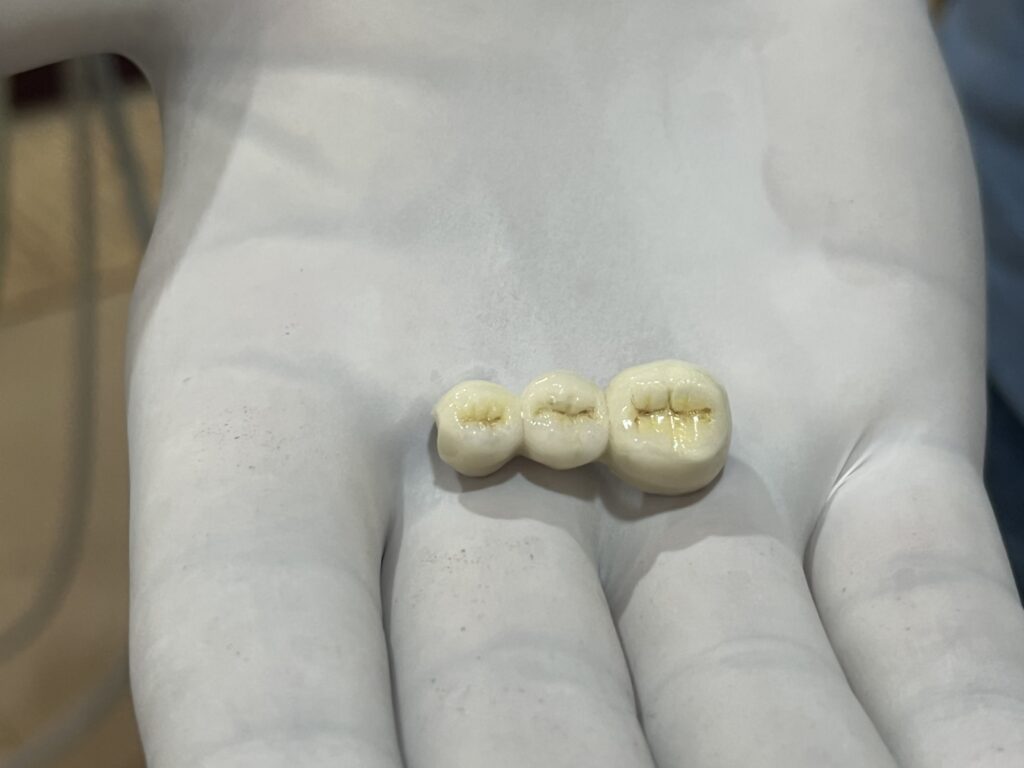
In the afternoon, I had an appointment with my dentist at 17:00. Today, he would remove my old bridge from my lower jaw. I got an anasthetic, first he put it in my arm to see if I am allergic. Then I got the injection in my mouth. It took two and a half hours to remove the old bridge, clean the gum, and put a little protection on it. I think he was doing a very good job. I paid 10.000 Rupees as a deposit for the lab and his work. The new bridge will probably arrive on Saturday.
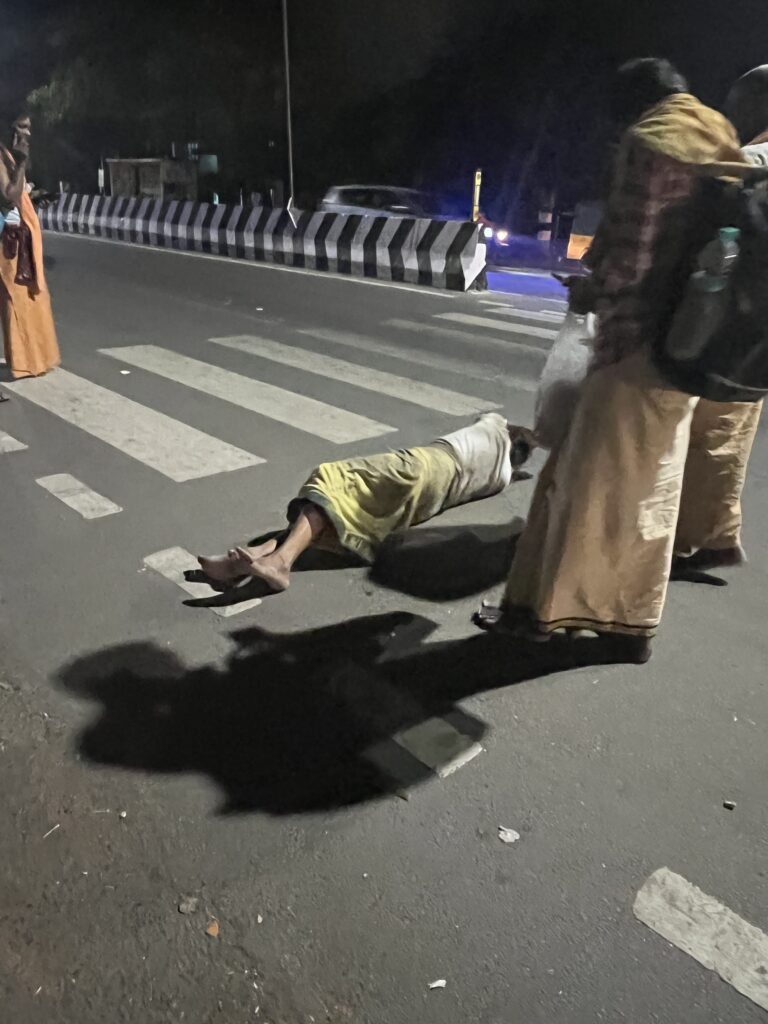
After I withdrew some more money from the SBI ATM to pay the dentist and my rent. I stopped at the supermarket for some snacks and food. On Chengam Road, I saw a man rolling his body on the road.
Rolling the full body on the ground for a spiritual purpose is a ritual known as Angapradakshinam (or Shayana Pradakshinam). It is a deeply devotional practice in Hinduism, often performed at major temples in South India.
1. What it is
- Definition: The word comes from Angam (body) and Pradakshinam (circumambulation). It involves lying flat on the ground and rolling sideways to travel around the temple’s inner sanctum.
- The Posture: Devotees keep their hands folded above their heads in a prayer position (Anjali Mudra) and roll their entire body along the designated path.
2. The Spiritual Purpose
- Complete Surrender: It is considered one of the highest forms of humility. By placing the entire body on the earth—the same earth everyone walks on—the devotee symbolizes the absolute surrender of their ego to the Divine.
- Fulfillment of Vows: Many people perform this as a Harake or Vratham (a vow). They may promise to do it if a loved one recovers from illness or if they overcome a significant life challenge.
- Atonement: It is also viewed as a form of penance (Tapas) to cleanse oneself of past negative karma or “sins.”
Passing Sarala’s Cafe, I saw Sarah sitting there. I stopped and joined her. My mouth was still numb, but I didn’t have pain. Soup was already out, but Sarala made me a new soup so I could eat something. That was really kind.
No responses yet